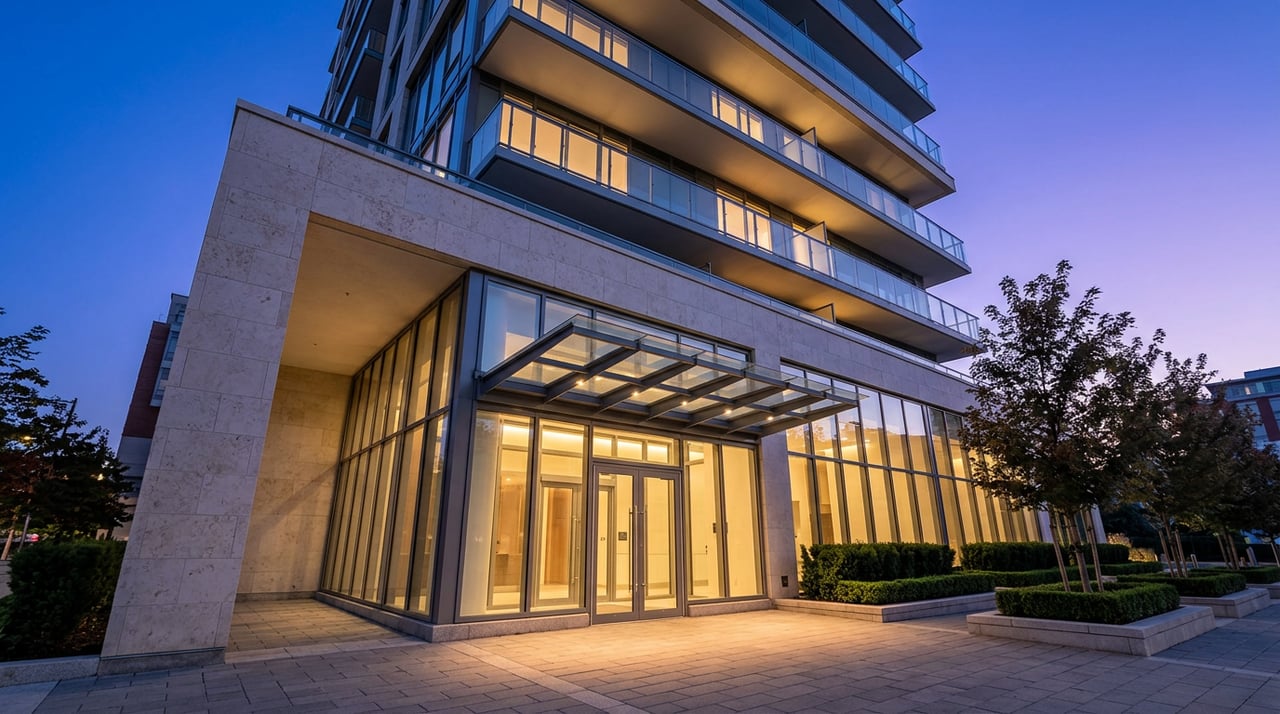
A buyer touring a high floor unit at The Verse, the tower anchoring The Boro's restaurant row of North Italia, Flower Child, and Bluestone Lane, asks a reasonable question before making an offer: if the board hits us with a big assessment down the road, can the owners vote it down? A little over two years ago, the answer was yes. Since July 1, 2024, in Virginia, it is no.
That change came from House Bill 1209, passed in the 2024 General Assembly session and folded into both the Property Owners' Association Act and the Virginia Condominium Act. It did not make headlines the way Florida's post-Surfside reforms did. But for anyone closing on a condo in a Tysons high-rise this year, it rewrites what due diligence actually needs to look like.
What Owners Used to Be Able to Do
Before HB 1209, Virginia condo and HOA owners had a statutory right built into both acts: if a board levied a special assessment, a majority of owners could vote, within a set window after notice, to rescind or reduce it. It functioned as a check on board authority. A board could propose an assessment for a roof, an elevator modernization, or a parking structure repair, but the people paying for it had a formal, codified way to push back.
That right is now gone for assessments tied to common area upkeep and capital component work. The bill's own legislative summary describes it plainly: it removes the provisions that let associations rescind or reduce assessments necessary for maintenance, repair, and replacement of capital components. A Virginia community-association law firm summarized the intent afterward, noting that the change helps ensure board decisions to fund necessary repairs will not be overturned by the ownership.
What Replaced the Vote
HB 1209 did not just take something away. It handed boards two new tools in the same breath.
First, boards can now levy an additional assessment unilaterally as long as it serves the association's interests and the money goes primarily toward common area upkeep or capital component work. No membership vote required, and no membership vote to undo it.
Second, boards can borrow money on the association's behalf to cover capital repairs and reserve shortfalls, and pledge the association's revenue, including future assessments, as security for that debt. That is a meaningful shift. A building's finances can now carry structured debt obligations that show up in dues for years, not just a one-time bill.
The same bill also gave Virginia law something it never had before: a formal statutory definition of "reserve study," describing it as a capital budget planning tool used to determine the physical condition and replacement cost of capital components, paired with an analysis of the association's capacity to fund that work.
Why There Is No Floor Underneath the Board's Judgment
Here is where the Tysons condo market runs into a gap that Florida buyers, for instance, do not face in the same way. Florida's post-Surfside reforms set hard numbers: a Structural Integrity Reserve Study on a fixed cycle for buildings three stories or taller, and a funding requirement tied to that study's findings.
Virginia set no such floor. The Condominium Act requires a reserve study at least once every five years and an annual board review of it, but it does not require any minimum funding percentage or dollar target. The statute's language leaves it to the board to adjust the budget and assessments as the board deems necessary to maintain reserves "as appropriate." That phrase was always somewhat elastic. Before 2024, an owner vote was the backstop if a board's judgment on "appropriate" drifted too far from what residents were willing to pay. Now that backstop is gone for capital-related assessments, and the reserve study itself, not a vote, is the only real check on how a board interprets that word.
For a building like Monarch, delivered in 2023, or the Flats at Tysons condos now under construction on Gallows Road, that matters in a specific way. A newly delivered building is still early in its five-year reserve study clock. The first mandated study may not exist yet, which means the reserve figures a buyer sees in year one or two often reflect what the developer projected rather than what a licensed reserve specialist has independently verified.
The Other Side of the 2024 Session
The same legislative session that removed the assessment vote also strengthened a different protection: access to the paperwork itself. A companion set of bills amended Virginia's resale certificate statute, which governs the disclosure packet a condo association must provide to a buyer before closing. Sellers can no longer waive or shorten the association's obligation to produce that packet, and if it is not delivered within 14 days of a request, it is treated as officially unavailable, which gives the purchaser a contractual right to cancel.
Put the two changes side by side and a pattern shows up that no listing description will spell out for you. Virginia shifted condo buyer protection away from a vote taken after the fact and toward document access taken before you sign. The resale certificate, the reserve study behind it, and the board minutes that show how a building has actually been governed are no longer background paperwork. They are the entire safeguard.
What This Looks Like on the Ground in Tysons
The Verse sits inside The Boro, walking distance to Whole Foods Market, CIRCA at The Boro, and LOOK Dine-In Cinemas, with a monthly condo fee that has averaged around $1,152.60 based on unit sales recorded in early 2026. A fee at that level tells you the association is collecting something, but it tells you nothing about whether that number matches what a reserve study actually recommends for a building of its age and component list. That comparison only shows up in the study itself.
At Monarch, one of the newest towers in Tysons, delivered in 2023, the diligence question runs in the opposite direction. A young building has less deferred maintenance to worry about, but it also has a shorter track record. A buyer there should ask directly when the first reserve study was completed or is scheduled, since the five-year statutory clock may not have produced a result yet.
The Flats at Tysons, the 86-unit condo project rising behind Patsy's American on Gallows Road, adds a third version of the same question. As of late 2025, the developer was projecting sales to launch in early 2026 with construction wrapping by year's end, which puts this building somewhere in that delivery window right now. Buying pre-delivery, or in the first months after handoff, means the initial reserve contributions and fee structure are still developer estimates. Ask when control of the board transitions from the developer to the owners, because that transition is typically when a truly independent reserve study gets commissioned.
Questions Worth Asking Before You Write an Offer
- When was the building's most recent reserve study completed, and by whom
- Has the board approved any additional assessments in the past 24 months, and for what capital components
- Has the association borrowed money or pledged future assessment revenue to a lender
- What do the board's last several sets of minutes say about deferred repairs or postponed capital projects
- If the building is under five years old, has a reserve study happened yet, or is the association still operating on developer projections
None of these questions require a law degree. They require asking for the resale certificate early, reading it before the inspection contingency expires, and treating the reserve study as more decisive than the monthly fee on the listing sheet.
Frequently Asked Questions
Does this change apply to townhome and single-family HOAs in Tysons, or only to condo towers? Both. HB 1209 amended the Property Owners' Association Act alongside the Condominium Act, so the same removal of the rescission vote and the same borrowing authority apply to HOA-governed communities, not just high-rise condos.
If I am buying a resale unit and there is already an active special assessment, can I negotiate around it? The law governs whether owners as a group can vote down the association's decision. It does not prevent a buyer and seller from negotiating who pays an existing assessment as part of the purchase contract, which is a separate conversation from the statutory vote.
How do I actually get a building's reserve study before I am contractually committed? Request it as part of the resale disclosure packet before your inspection contingency deadline. Under the 2024 amendments, if the packet is not delivered within 14 days of a request, it is deemed unavailable, which gives you a contractual right to cancel rather than proceed blind.
Reading a reserve study and a set of board minutes is not the kind of thing a listing sheet prepares you for, and it is exactly the kind of groundwork Rachel Van Zanten walks Tysons buyers through before an offer goes in, not after. If a high-rise in The Boro or a new-construction unit at the Flats at Tysons is on your list this fall, let's connect and go through the paperwork together before you're under contract.