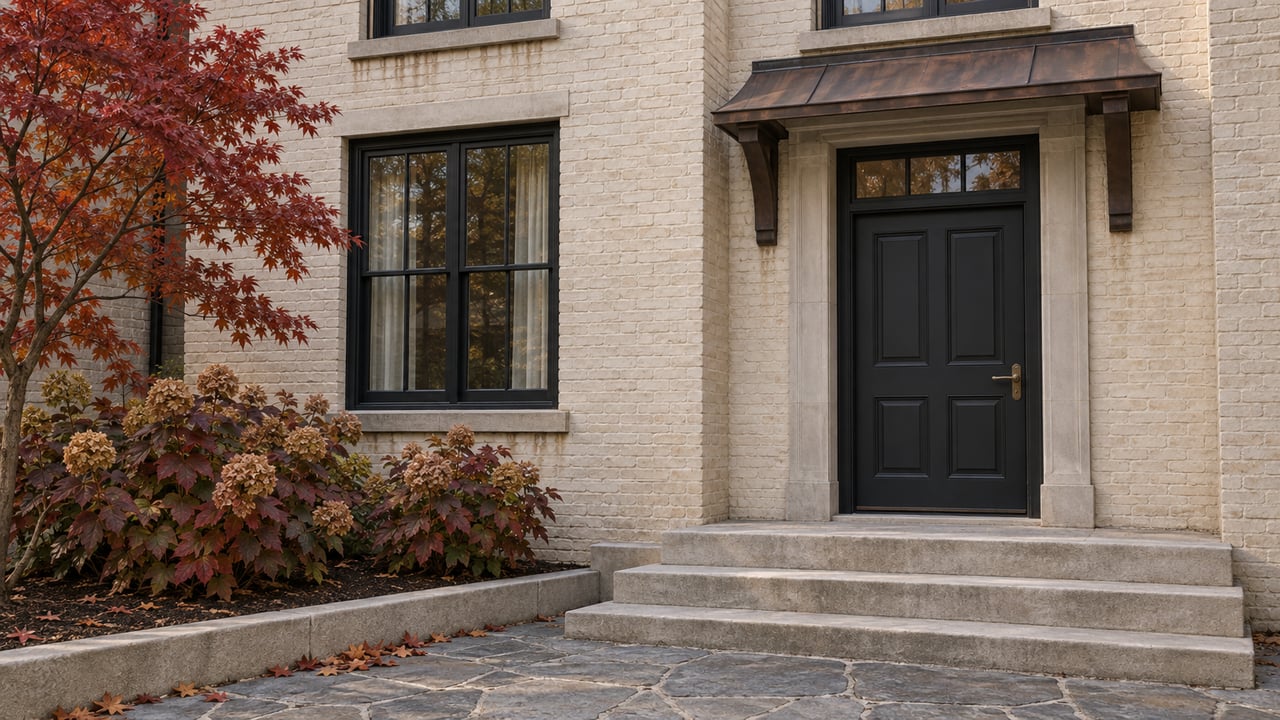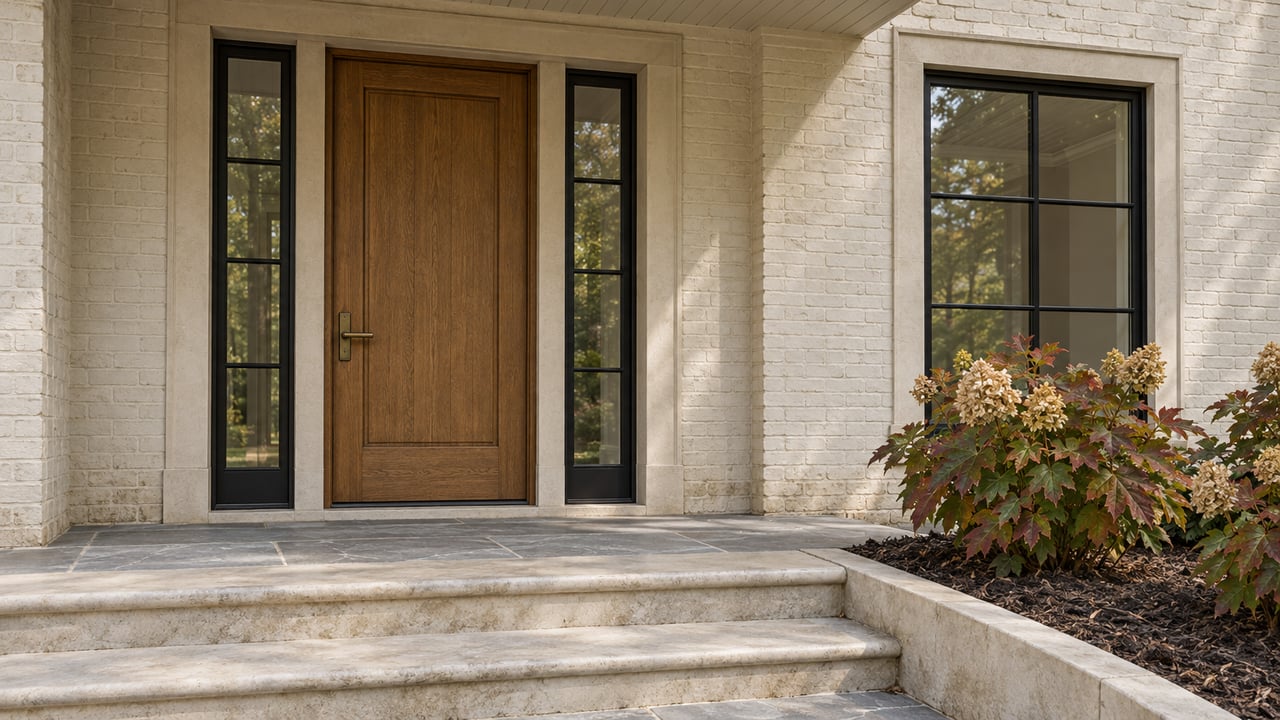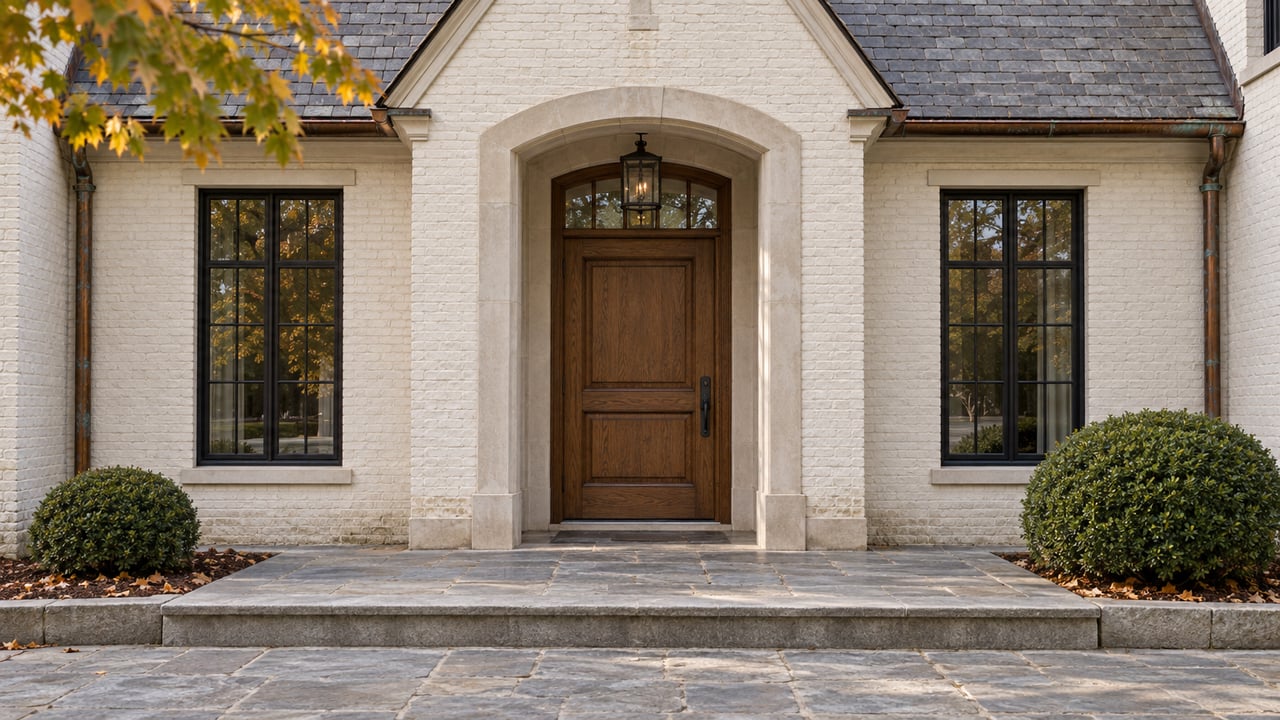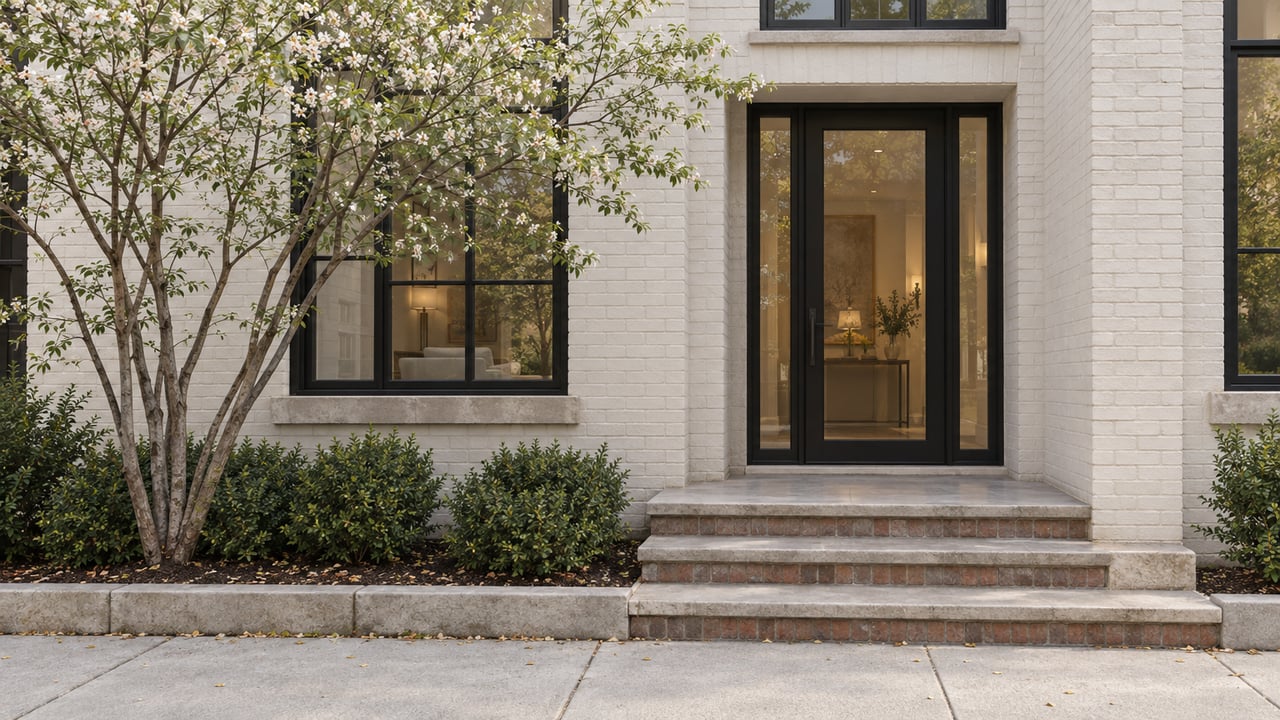
Picture two brick capes, both listed this spring with a Falls Church address, both priced within a few thousand dollars of each other. A buyer touring both assumes the choice comes down to layout, condition, maybe a driveway. The key difference is that one house sits inside the independent City of Falls Church and pays that city's tax rate to that city's treasurer. The other sits in Fairfax County, uses the same ZIP code out of postal habit, and answers to an entirely different government. Buyers can confirm the jurisdiction before comparing the properties.
That split is the first surprise. The second is stranger, and it matters more once you're actually inside the city limits comparing one block to another: the City's own assessor treats land value as almost perfectly uniform across every neighborhood, while the part of your assessment that swings wildly from block to block is the house itself. If you've been told the "good neighborhood" premium in Falls Church lives in the dirt, the data says otherwise.
The mailing address isn't the taxing authority
The City of Falls Church covers just 2.2 square miles, with its own government, police department, and school system, separate from the surrounding counties. Its primary ZIP code is 22046, but homes in nearby Fairfax County neighborhoods, including areas like Merrifield, Seven Corners, and Bailey's Crossroads, also carry a Falls Church mailing address without being inside city limits, according to the city's own address finder tool. Two Metro stations bracket the area: East Falls Church on the Orange and Silver lines, and West Falls Church, served only by the Orange line. Neither station tells you which government sets your tax rate.
The practical fix is simple but easy to skip during a fast-moving showing schedule: confirm jurisdiction before you compare tax numbers on two listings, not after you're under contract. The city's address lookup tool settles it in seconds. A Fairfax County parcel search does the same for anything outside the line.
What the city actually charged homeowners this year
On May 11, 2026, the Falls Church City Council voted 6-1 to cut the real estate tax rate half a cent, from $1.185 to $1.18 per $100 of assessed value, for fiscal year 2027, according to ArlNow's coverage of the budget adoption. Councilman Arthur Agin cast the lone dissenting vote, arguing there was too much uncertainty in the city's revenue streams to cut rates at all.
The cut didn't lower anyone's bill. Because residential assessments rose an average of 6.2% from market activity alone, with single-family homes up 8.1% on the city's own accounting, the median Falls Church homeowner will still pay $557 more this year than last, a 4.6% increase, according to the Falls Church News-Press's report on the adopted budget. Sewer rates are rising 5%, stormwater fees 7%, and trash collection 4% on top of that.
Council member Erin Flynn framed the tradeoff plainly at the meeting:
"It's important to be responsible to residential homeowners' burden. People continue to face unemployment and underemployment."
Fairfax County's countywide base rate, by comparison, ran $1.1225 per $100 of assessed value for tax year 2025, a level the county had also proposed carrying into 2026. That gap, a few cents on paper, compounds differently depending on how fast your specific parcel's assessed value is climbing, which is where the story gets more interesting than a simple rate comparison.
The land value experiment nobody expected
Falls Church Pulse, a local civic newsletter, obtained the city's assessment data files directly from the Assessor's Office and ran their own analysis rather than relying on the city's summary numbers. What they found upends the assumption that a better block buys better land value. From 2019 to 2025, land values for detached single-family homes rose 44% to 46% for 84% of properties citywide, and the Pulse's land-value analysis reports that the City Assessor confirmed neighborhood location is not a factor in how land is valued.
In other words, a lot in a neighborhood everyone assumes commands a premium is, according to the assessor's own formula, worth the same per square foot as a comparable lot three neighborhoods over. The uniformity has a real consequence for older, smaller homes: because land makes up roughly two-thirds of their assessed value on average, a flat citywide land increase hits those owners harder in percentage terms than it hits owners of larger, newer construction where the structure carries more of the value.
Where the real variation actually lives
If land isn't where neighborhood differences show up, the structure is. The Pulse's citywide analysis of the 2026 assessment cycle found that among single-family homes, median assessment growth by neighborhood ranged from 0% to 15%, and that improvement values, not land, drove almost all of that spread. One neighborhood, Larchmont Terrace, saw a median improvement-value increase of 31% in a single year, according to the Pulse's neighborhood-level breakdown, while other neighborhoods saw improvement values fall from the prior year.
A third of the city's detached single-family homeowners received assessment increases of 10% or more this cycle, well above the advertised citywide average, according to the Pulse's guide on filing an appeal. Council member Erin Flynn flagged the pattern publicly in March 2026, noting that a subset of homeowners had seen double-digit assessment increases, "even over 15%." Mayor Letty Hardi added that she had "certainly gotten a larger volume of concerns from residents" and expected more assessment appeals this year as a result.
The mechanism is subtle but concrete: two homes with the same lot size in the same city can carry very different assessed values depending on renovation history, condition, and recent comparable sales specific to their micro-neighborhood, because the assessor's model reconciles all sales within a defined area over a rolling twelve-month window. A kitchen remodel or a wave of teardown-and-rebuild activity two doors down can move your assessment in a way a quiet block of untouched 1960s ramblers never will.
A quick side-by-side
| City of Falls Church | Fairfax County (Falls Church-address areas) | |
|---|---|---|
| FY2027 real estate tax rate | $1.18 per $100 (adopted May 11, 2026) | $1.1225 per $100 (TY2025 base rate) |
| Governing school system | Falls Church City Public Schools | Fairfax County Public Schools |
| Land area | 2.2 square miles | Part of a much larger county |
| Primary ZIP code | 22046 | Falls Church mailing address used, but outside city limits |
What this means if you're comparing two "Falls Church" listings
Development is also reshaping the tax base in ways that matter to anyone thinking about where growth, and future assessment pressure, is headed next. The city's own economic development page notes new 2026 additions to the Founders Row retail block, including Stratford Garden and The Cheese Cartel, plus Virginia's first Grocery Outlet location opening at 500 South Washington Street, according to the city's business milestones page. At the same time, the West Falls project lost momentum when developer Hoffman & Associates decided not to proceed with Phase II, a decision that pulled roughly $800,000 in expected annual revenue from a planned $10 million lease and returned two parcels near the middle and high schools to the city, per Falls Church Pulse's budget reporting. New commercial and multi-family construction help absorb some of the city's rising costs. The reporting does not establish how that change will affect homeowners’ future tax bills.
Before you weigh two similarly priced listings against each other, verify which government actually taxes the property, ask your agent to pull the assessed land and improvement values separately rather than just the total, and if you're buying inside the city, ask about the specific neighborhood's recent assessment trend rather than the citywide average. A listing priced at the median tells you almost nothing about which side of these lines it falls on.
Frequently Asked Questions
How do I confirm whether a specific address is inside the City of Falls Church? Use the city's own address finder tool, which checks individual addresses against the actual jurisdiction boundary rather than relying on ZIP code alone.
When does the city mail new assessments each year? Notices go out in the first quarter, typically mid-March, with an effective date of January 1. In the 2026 cycle, appeals to the City Assessor were due by April 15, with Board of Equalization appeals following by June 5, according to the city's assessment page. Expect a similar window when 2027 notices arrive next spring.
Does a stalled development project like West Falls Phase II affect my personal tax bill? Not directly. The planned lease was expected to generate revenue for the city, but the effect of Phase II not proceeding on future residential assessments isn't established here.
If you're weighing a move into Falls Church, or trying to make sense of what a listing's price actually implies about your future tax bill, Rachel Van Zanten can walk through the jurisdiction, the assessment history, and the neighborhood specifics with you before you write an offer. Let's Connect.
This article is general information, not legal, tax or financial advice. Consult a qualified professional about your situation.