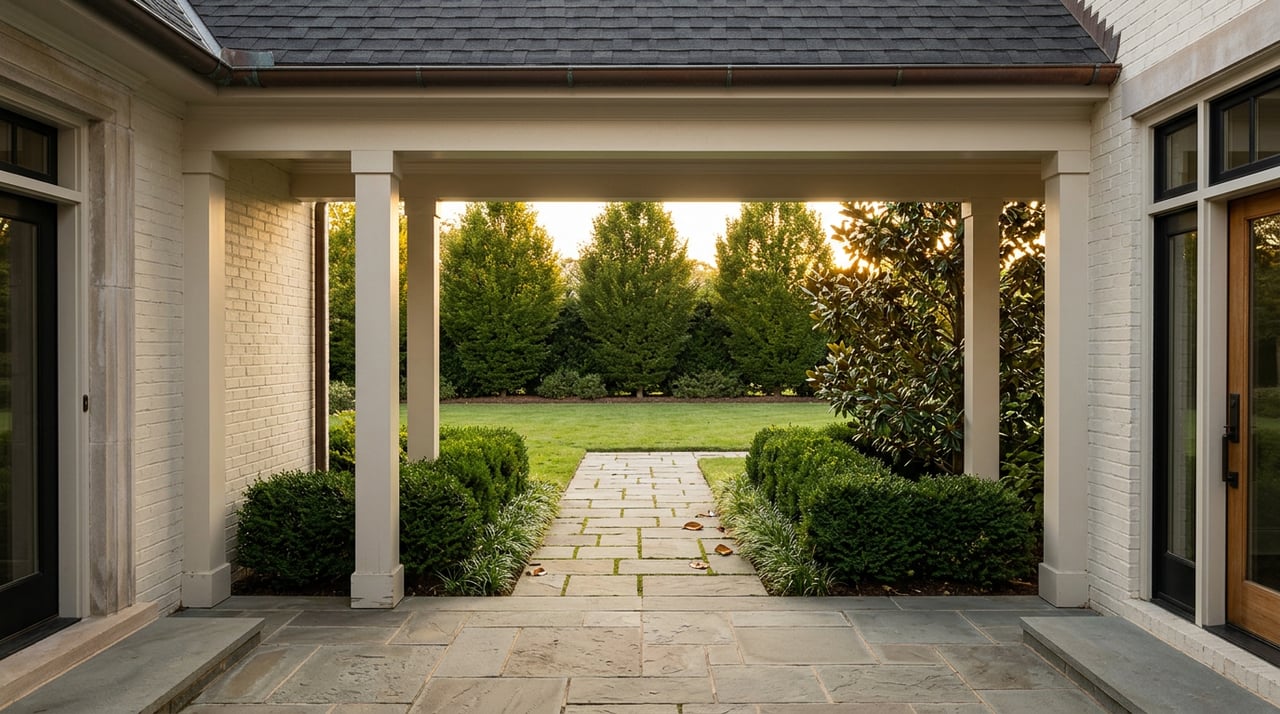
In March 2026, homeowners in Ashburn's Regency neighborhood started fielding a number most people never expect to see attached to a modest brick colonial: $4.4 million an acre. The offer, reported by Data Center Dynamics and picked up by outlets including InsideNova and Northern Virginia Magazine, would value the community's roughly 130 acres at close to $576 million if the deal closes. Regency's homeowners association went as far as forming an LLC to manage the negotiations. According to that March reporting, no formal application had been filed with Loudoun County, and the land was still zoned residential.
If you have been comparing Ashburn to other Loudoun or Fairfax neighborhoods on a spreadsheet, the Regency story and the county's tax rate look unrelated. One is a curiosity about a single subdivision. The other is a line item that makes Ashburn look like a bargain. They are the same story told at two different scales, and understanding how they connect matters more than either fact on its own.
A Neighborhood Worth More Without the Houses On It
Regency sits off Waxpool Road and Ashburn Village Boulevard, in the thick of what the industry calls Data Center Alley. According to Data Center Dynamics, plans for the site call for up to six data center buildings delivering roughly 72 megawatts each, a combined 432 megawatts on a footprint that currently holds somewhere between 143 and 150 single-family homes, depending on which outlet's count you use. The community is already boxed in by industrial neighbors: DataBank and Sabey facilities sit to the north, Aligned is directly east, a Digital Realty campus anchors the south, and a CloudHQ project is planned along the southeast edge.
That proximity is precisely why the land is worth more empty than occupied. A hyperscale operator does not need Regency's houses. It needs Regency's acreage, its existing power infrastructure nearby, and its position inside a corridor where greenfield sites have mostly run out. When a developer runs out of raw land in the densest data center market in the world, a subdivision starts to look like inventory.
The County-Wide Trade That Makes This Possible
None of this happens in a vacuum. Loudoun County has cut its real property tax rate every year for a decade, from $1.145 per $100 of assessed value in 2016 to $0.805 in tax year 2026, and county officials describe it as the lowest rate in Northern Virginia. That did not happen because Loudoun spends less. It happened because data centers now generate almost half of the county's property tax revenue, and the assessed value of that commercial base has grown fast enough to absorb costs that would otherwise land on homeowners.
| 2016 | Tax Year 2026 | |
|---|---|---|
| Loudoun real property tax rate (per $100 assessed value) | $1.145 | $0.805 |
A 2026 report from Mangum Economics for the Northern Virginia Technology Council put a number on what that cut is actually worth. Without data center revenue, the report estimated Loudoun's residential rate would need to rise to roughly $1.537 per $100, a 91 percent increase, adding about $5,856 a year to the tax bill on a median-valued home. That is the countywide side of the ledger: every homeowner in Loudoun, whether they live near a server farm or twenty miles from one, benefits from the same subsidy.
One Parcel's Fortune Is Not the County's Guarantee
The part that gets lost when people compare Ashburn's tax rate to Fairfax's or Arlington's is that the benefit is spread evenly while the exposure is not. CBRE data cited in Data Center Frontier's coverage of Loudoun's FY2026 budget put data center value per parcel at 16 times the next highest land use in the county. That kind of value differential does not stay confined to already-built data center campuses. It creates pressure on anything nearby that could plausibly be rezoned, reassembled, or redeveloped.
Regency is the most visible example this year, but it is not isolated. In February 2026, Cologix paid $375 million for the Beaumeade Corporate Park, an industrial office site that Washington Business Journal reported was four times its assessed value, with plans to build what the company called an interconnection hub. As Northern Virginia Magazine reported, Cologix CEO Laura Ortman described the acquisition as reflecting how rare land of that kind has become:
"Opportunities to acquire land of this caliber, in the center of Data Center Alley, are exceptionally rare."
The pattern extends beyond commercial parcels, too. George Washington University sold its Ashburn campus to Amazon Data Services for a reported $427 million, and Leesburg developer Chuck Kuhn's company, JK Land Holdings, sold a parcel to a data center investor for $615 million in late 2025. None of these deals moved the countywide tax rate on their own. Each one is a data point in the same underlying trend: land inside or adjacent to the corridor is being priced for its infrastructure potential first and its current use second.
The Friction Nobody Puts on the Listing Sheet
A payout of $4.4 million an acre sounds simple until you try to deliver it. Business Insider's reporting, referenced in coverage of the Regency situation, found that an early poll showed 138 of the neighborhood's 143 households willing to entertain a sale if the price was right. Once actual terms entered the conversation, support got more complicated. That is a predictable outcome of any land assembly. One household may be ready to close tomorrow. Another has a child mid-way through a local school. A third believes the number will look small in five years if the corridor keeps expanding the way it has.
The transaction also depends on rezoning approval from Loudoun County, since the land is currently residential, and as of the most recent reporting no formal application had been filed. A deal of this size does not close on a single homeowner's timeline. It closes on the county's, and county approval is never guaranteed.
What This Means If You're Comparing Ashburn to Other Loudoun Neighborhoods
None of this should be read as a reason to avoid Ashburn. The median home price there in 2026 has run roughly $710,000 to $725,000, with detached homes typically starting near $800,000, and the tax advantage is real for every household in the county regardless of what happens on any single street. What it should change is the question a comparison shopper asks. "What's the tax rate" is a countywide answer. "What is actually planned or possible near this specific parcel" is a street-level one, and only the second question tells you anything about the property you are actually buying.
A few ways to get a real answer before you write an offer:
- Check Loudoun County's data center standards page and recent Board of Supervisors meeting minutes for any zoning applications near the address you're considering.
- Ask whether an HOA in the immediate area has taken any formal or informal steps toward a land sale, since Regency's affiliate LLC is a model other communities may follow.
- Look at what borders the parcel today. A greenfield lot next to an existing hyperscale campus carries different long-term potential than one buffered by established residential zoning on all sides.
- Treat any land value discussion as fluid. Loudoun's rural policy area, which covers about two-thirds of the county's land, is not zoned for data center use, but the boundary of what is zoned for it has moved before and can move again.
Frequently Asked Questions
Does Loudoun's low tax rate mean my street could be next for a data center buyout? Not necessarily. The tax benefit applies countywide regardless of location. Buyout interest is driven by proximity to existing infrastructure, available acreage, and zoning, which is why some streets see activity and most never do.
How would I find out if a specific address is near planned data center capacity? County planning applications, Board of Supervisors agendas, and utility interconnection filings are public record. A local agent who tracks these regularly can flag activity near a property before it becomes news.
If you are weighing Ashburn against another Loudoun or Fairfax neighborhood and want a read on what's actually happening around a specific address, not just the countywide averages, Rachel Van Zanten can walk you through it. Let's connect.
This article is general information, not legal, tax or financial advice. Consult a qualified professional about your situation.