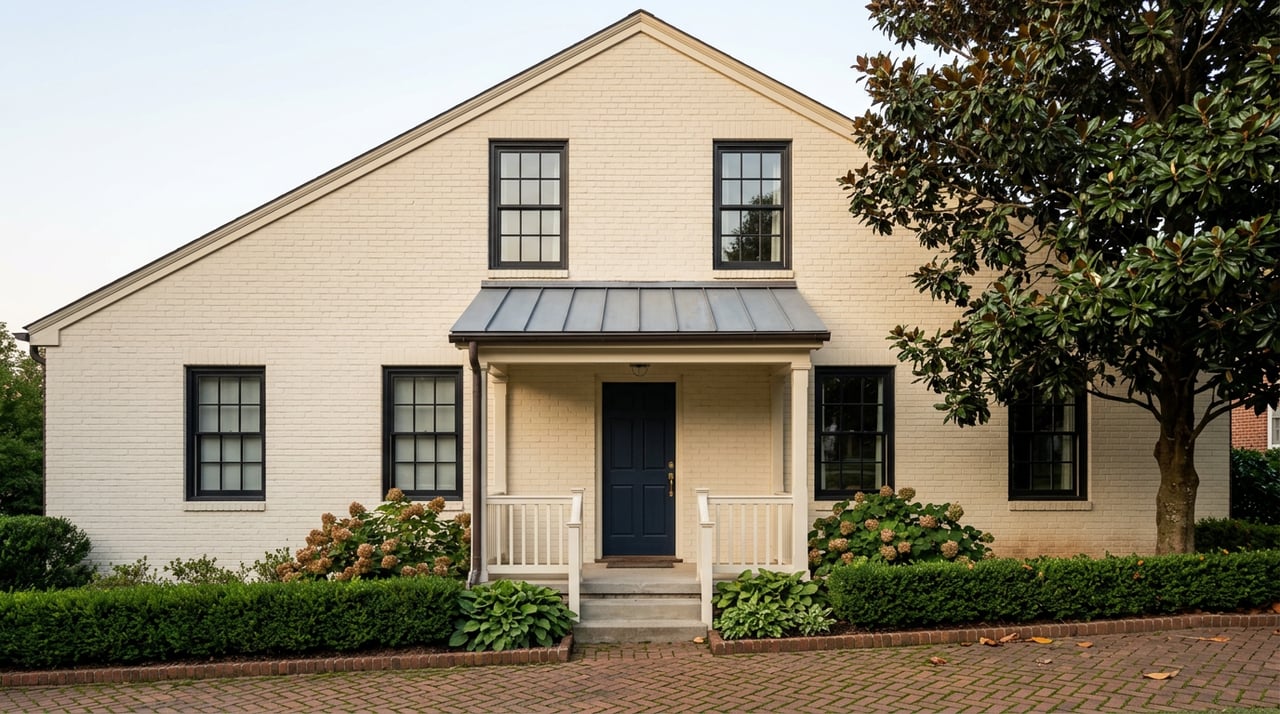
Ask why a three-bedroom bungalow near King Street costs more per square foot than a much larger colonial out in Lansdowne, and most people give the same answer: character. Old brick, mature trees, a walk to dinner instead of a drive. That answer isn't wrong. It's also not the whole story.
Inside Leesburg's Old & Historic District, the premium buyers pay isn't only for what's visible from the sidewalk. It's for a paper trail that most owners never think to keep and most buyers never think to ask for until the transaction is already underway.
What the Premium Actually Looks Like
Zillow's home value index put Leesburg's typical home at $756,483 as of late June 2026, up 1.3 percent over the past year, with homes going to pending in about six days townwide. Redfin's figures for the Old & Historic District specifically show a median sale price of $894,698 in May 2026, up 1.4 percent year over year. That's roughly 18 percent above the town's typical value, though the figures use different measures and cover different months.
The gap looks even sharper earlier in the year. In March 2026, Redfin's district-level data put price per square foot inside the Old & Historic District at $639, against $313 townwide, more than double. Sales from that period show why size alone doesn't explain it: a 624-square-foot home sold for $399,000, while a 3,868-square-foot home brought $1.2 million. A buyer paying $639 a square foot for a few hundred square feet isn't purchasing space. They're purchasing something else.
| Leesburg townwide | Old & Historic District | |
|---|---|---|
| Typical home value / median sale price | $756,483 (Zillow ZHVI, June 2026) | $894,698 (Redfin median, May 2026) |
| Price per square foot (March 2026 snapshot) | $313 | $639 |
The Rule Nobody Reads Until They Need To
The Town of Leesburg's Old & Historic District, known locally as the H-1 overlay, requires a Certificate of Appropriateness for every exterior alteration on a covered property, and the town is specific that this includes in-kind replacement of material. Swap a rotted window for an identical replica, and technically you needed approval before you started.
Not every project carries the same weight. The town splits review into two tracks:
- Handled by Preservation staff, no public hearing: fencing, signage, and changes to exterior paint colors, reviewed in the office and submittable anytime.
- Handled by the full Board of Architectural Review, with an advertised public hearing: window replacement, additions, demolition, and new construction, all of which need approval before work begins and before other town or county permits are issued.
Some things fall outside the review entirely. Landscaping, true in-kind general maintenance, and temporary items like porch furniture or a bird bath aren't reviewed at all, and murals on private buildings are flatly not permitted anywhere in H-1. The line between "minor fix nobody would question" and "material change that needed a hearing" is narrower than most owners assume.
Where the Premium Gets Tested
Here's the part that rarely makes it into a listing description: a current seller may not know whether a previous owner replaced windows or added a fence without pulling a Certificate of Appropriateness.
That gap tends to surface at the worst possible moment for a seller: during a buyer's due diligence period, right as the seller is trying to realize the premium the district is supposed to justify. Local guidance for sellers in the district is consistent on this point, sellers are advised to surface any prior BAR approvals and document any unpermitted changes, because if the work surfaces during due diligence, it can complicate the sale. A buyer who's paying $639 a square foot for provenance has every reason to check whether that provenance is actually on file.
This is something the median price doesn't show. The district's $894,698 median doesn't tell buyers whether a particular house has clean paperwork behind it. A house with an undocumented window swap from a decade ago is still charming and walkable to downtown. The premium it can command is only as solid as the record behind it.
A Once-a-Month Calendar Meets a Fast-Moving Contract
Even a compliant seller can run into a scheduling problem. The Board of Architectural Review holds one regular business meeting a month, on the third Wednesday, with an additional work session on the first Monday when needed, both at 7 p.m. in the Council Chamber at Town Hall, 25 W Market St. Preservation staff, including Preservation Manager Lauren Murphy, Senior Planner Heather Schmidt, and Planner Ashleigh Goedeke, hold walk-in office hours downtown on Wednesdays from 9 a.m. to 5 p.m. at 15 North King Street, and applications move through the town's eTRAKiT portal.
Across Loudoun County, homes averaged just 17 days on the market in June 2026, unchanged from a year earlier, according to the Northern Virginia Association of Realtors. Run that pace against a board that meets once a month for anything beyond staff-level approval, and the math gets tight fast. A buyer's inspector flags an unpermitted window early in a fast-moving contract, and the next full board meeting might land closer to settlement than anyone budgeted for. In most Leesburg neighborhoods, a mid-contract repair is a phone call to a contractor. In the H-1 district, it can be a calendar problem.
The Survey That's Rewriting the Map
One more moving piece worth knowing about if you're buying or selling inside the district: the town brought in outside consultants from Stantec to update its Architectural Survey of the Old & Historic District, with fieldwork starting in December 2024, its first review of this kind in more than two decades. The survey catalogs the architectural style, approximate age, and contributing or non-contributing status of every structure inside the boundary.
That classification isn't trivia. A home's contributing status can shape how future exterior work gets reviewed and what story a seller can accurately tell about the house's history. Once the update is finalized, it's worth checking where your address lands, rather than relying on a classification that predates the current survey by two decades or more.
Before You List or Offer
If you're selling inside H-1:
- Pull together any Certificates of Appropriateness you have on file, even for work that felt minor at the time.
- If you're not sure whether a past project needed one, ask Preservation staff before a buyer's inspector asks for you.
- Budget calendar time for the board's monthly cycle if any open item needs full review before closing.
If you're buying inside H-1:
- Ask directly whether visible exterior changes, windows, fencing, additions, have documented approval.
- Don't assume "it looks original" means it was reviewed. In-kind replacement still requires a Certificate of Appropriateness.
- Factor the board's meeting schedule into your contract timeline if you're planning any exterior work after closing.
Frequently Asked Questions
Does every older-looking house in Leesburg fall under the H-1 district? No. The Old & Historic District has specific mapped boundaries roughly around the downtown core near King, Market, and Loudoun Streets. A home can look historic and still sit outside H-1, in which case none of this review process applies.
What if the unauthorized work happened long before I owned the home? Records of prior work may still matter during a future sale's due diligence, regardless of who made the changes.
Does the district review touch anything inside the house? No. The H-1 overlay is focused on exterior character. It doesn't restrict interior layout, use, or renovations that aren't visible from the outside.
If you're weighing a purchase in Leesburg's Old & Historic District, or getting ready to list one, the paperwork behind the premium matters as much as the price per square foot. Rachel Van Zanten has spent 20-plus years guiding Northern Virginia buyers and sellers through exactly this kind of transaction friction, before it becomes a closing surprise. Let's Connect.
This article is general information, not legal, tax or financial advice. Consult a qualified professional about your situation.